
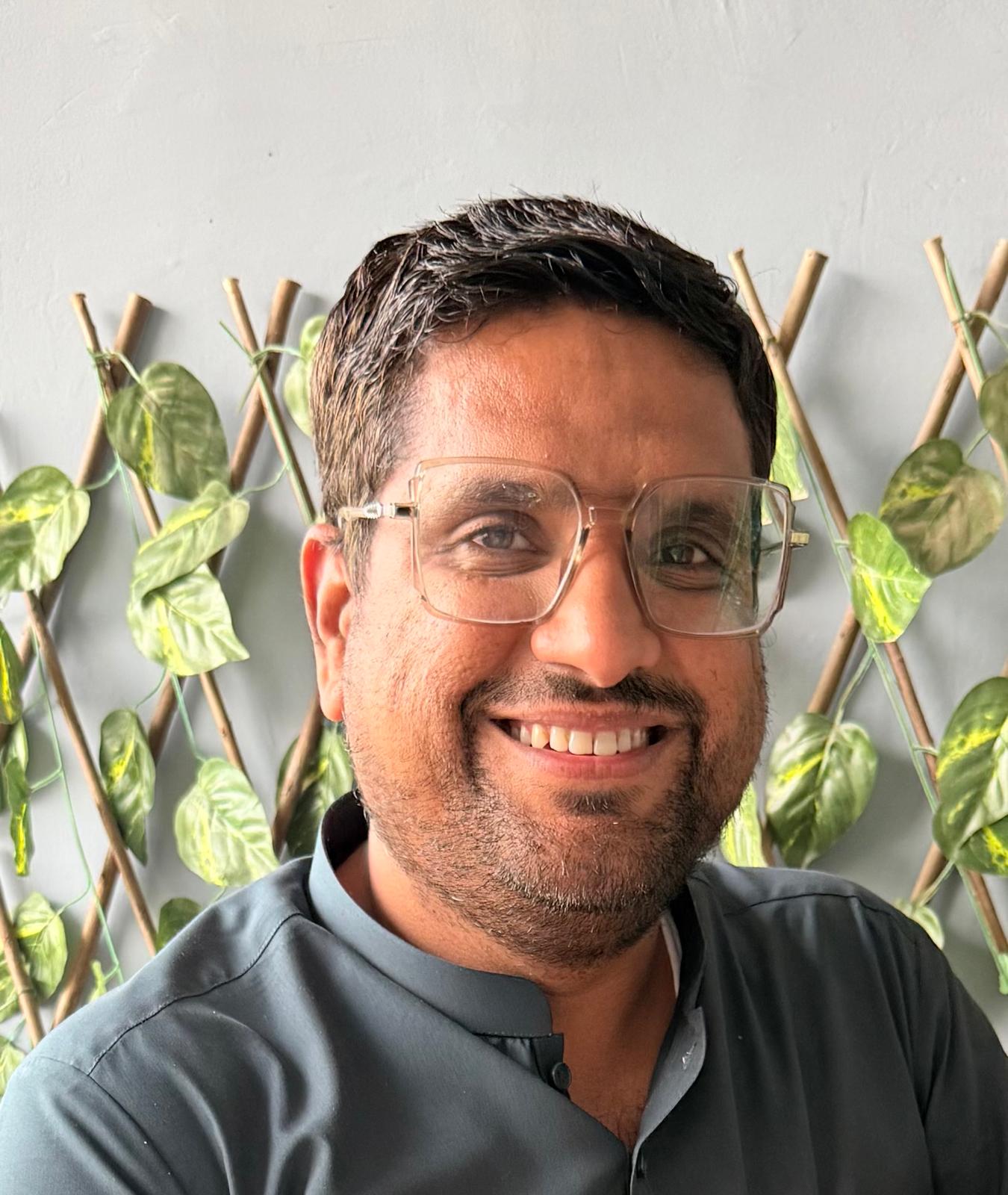
Faisal Rasool is a Postdoctoral Researcher in Entrepreneurship and Innovation at Atlantic Technological University, working within the TU RISE project. His research sits at the intersection of digital transformation, circular economy,and innovation ecosystems, with a particular focus on supply chain digitalisation and inter-organisational collaboration. He holds a PhD in Enterprise Engineering from Università degli Studi di Roma Tor Vergata, where his work explored the role of digital technologies and reverse logistics inshaping collaborative supply chains.
Faisal has an international academic profile, having taught and conducted research across Europe, Asia, and Africa, including engagements in Spain, Japan, and Togo. His work has been published in leading journals such as Business Strategy and the Environment and International Journal of Physical Distribution & Logistics Management. He combines rigorous research with applied teaching andindustry engagement, aiming to generate insights that are both academically robust and practically relevant.
Faisal’s research focuses on how digital technologies and circular economy practices reshape organisational capabilities, supply chains, and innovation processes. His work explores how firms adopt digital tools to enhance collaboration, improve sustainability outcomes, and develop resilient and adaptive business models. A central theme in his research is understanding how innovation unfolds across organisational boundaries, particularly in the context of inter-firm collaboration and ecosystem dynamics.
Within DICE Labs, Faisal contributes to research on entrepreneurial behaviour, digital entrepreneurship, and social innovation, aligning with broader efforts to support regional enterprise development and knowledge transfer. His work engages closely with industry and policy stakeholders, with the aim of translating research into actionable insights for businesses and institutions.
His innovation expertise includes supply chain management, innovation processes, and organisational transformation, with a focus on addressing real-world challenges related to sustainability, and digitalisation.
Entrepreneurial behaviour and start-up strategy; digital entrepreneurship and innovation adoption (including AI in organisational settings); innovation ecosystems and inter-organisational collaboration; and the role of policy and institutions in supporting enterprise development, social innovation, and regional growth.
Interesting in supervising projects with the following methodologies: qualitative methods(semi-structured interviews, case studies, thematic analysis); mixed-method approaches; survey-based research; and applied, industry-engaged research projects with real-world organisational or entrepreneurial contexts.
In 2015, UN member states agreed to 17 global Sustainable Development Goals (SDGs) to end poverty, protect the planet and ensure prosperity for all. This person’s work contributes towards the following SDG(s): 4, 8, 9, 17


